
The first time a Shenzhen marketing lead asked me to “just adapt the Douyin approach” for their influencer marketing Africa (Nigeria) launch, I had to stop him mid-sentence. There is no direct adaptation. Not because Nigeria lacks influencers, it has a deep, fast-moving creator economy doing real commercial work every day, but because the thing that makes someone worth booking flips almost entirely once you cross into this market.
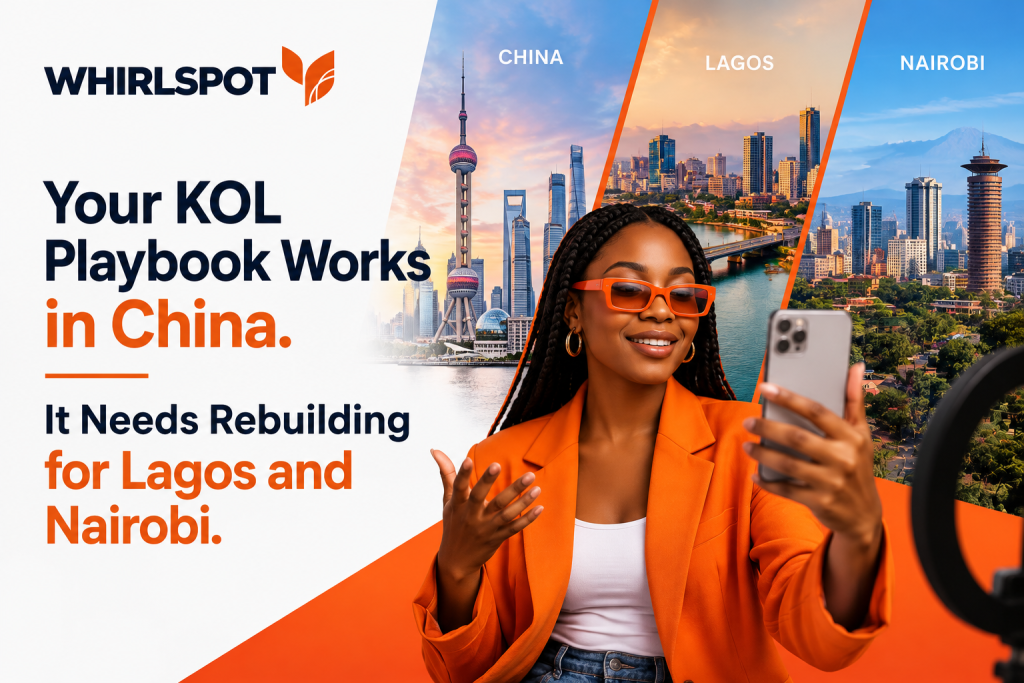
In China, a KOL earns status through polish and proximity to prestige, the aesthetic distance that makes a creator feel like a small celebrity. In Lagos or Nairobi, that same polish reads as a red flag. A creator’s credibility here comes from feeling reachable, not aspirational. That single reversal is the reason so many Chinese brands book a huge name, get a beautiful recap deck, and watch sales barely move.
I’ve sat through enough of these post-mortems to see the pattern repeat: the brand imports its home-market playbook wholesale, spends the bulk of the budget on the biggest name it can afford, and ends up with content that photographs well and converts almost nobody. Let’s get into why, and what actually works instead.
Why the Influencer Marketing Africa Playbook Breaks the Minute It Leaves China
KOL — 关键意见领袖 — is a Chinese term through and through. It grew up on Weibo, spread through Douyin and WeChat commerce, and it carries a very specific set of assumptions: that the audience wants to watch someone slightly out of reach, curated, brand-safe. Nigerian and Kenyan audiences, along with most Western agencies, use the word “influencer” instead, and the vocabulary difference is really a values difference in disguise.
A 2020 GeoPoll survey across Kenya and Nigeria, still the most granular data set I’ve found for these two markets specifically, found that 53 percent of respondents trust influencers over brand messaging itself, with journalists and industry experts ranked as the single most trusted category. It’s six-year-old data at this point, and I’d treat it as a historical baseline rather than a current number, platform behavior and audience skepticism have both shifted since then, but the underlying pattern still holds in every campaign I’ve run since: people trust whoever sounds like they’re giving an honest, informed opinion, not reading a script.
Understanding the KOL Ecosystem in Nigeria and Kenya
This market has matured enough to support real specialisation; macro names with reach into the hundreds of thousands, mid-tier creators with tighter and more engaged niche followings, and micro or nano creators whose entire value is that they still feel like a normal person rather than a media personality.
For tech specifically, the mid-tier reviewer usually beats the mega-influencer on actual purchase intent, and it isn’t close. One widely cited guide on African influencer marketing claims nano influencers can produce up to 49 percent higher engagement than micro influencers when the content matches the niche tightly. Worth flagging: that number comes from an influencer marketing platform’s own blog, and platforms like that have an obvious commercial interest in making the smaller tier look effective. I’d treat it as directionally true rather than gospel — it matches what I’ve seen on the ground, but I’d want a neutral source like Kantar or GSMA before quoting it to a client as hard fact. What I can say from direct experience: a dedicated tech unboxer with fifteen thousand genuinely engaged followers has moved more units for clients than a celebrity with two million who’s never touched the product.
Which Platforms Actually Matter for a Chinese Tech Brand Here
Each platform does a different job in the funnel, and treating them as interchangeable is the fastest way to waste budget.
- YouTube: long-form unboxing and review content — still the trust-building backbone for phones and gadgets, this is where a buyer goes to settle real doubts before spending money
- Instagram: lifestyle placement and product-in-use content, strong for reach and for showing the device in everyday African contexts rather than a studio shot
- TikTok: younger audience, fast-cut demo content, increasingly where discovery starts before a buyer ever searches the product by name
- X, formerly Twitter: where tech-literate audiences argue about specs and debate new launches — useful for real-time buzz around a release date
Awareness usually starts on TikTok or Instagram, doubt gets resolved on YouTube, and launch-day noise lives on X. Covering only one of these stages is the single most common structural mistake I see in campaigns coming out of Shenzhen and Beijing.
How to Vet and Choose the Right KOLs
Follower count is the easiest number to check and the least useful one. Here’s what actually matters.
- Engagement quality over raw follower count. In our campaigns across Nigeria and Kenya, I’ve watched a creator with 8,000 followers and a 12 percent engagement rate consistently outsell one with 200,000 followers and a 0.8 percent rate. That gap shows up in sales, not just in vanity metrics.
- Past brand partnerships, especially with competing or adjacent tech brands — a reviewer who’s obviously for hire to anyone loses the credibility that made them worth booking in the first place
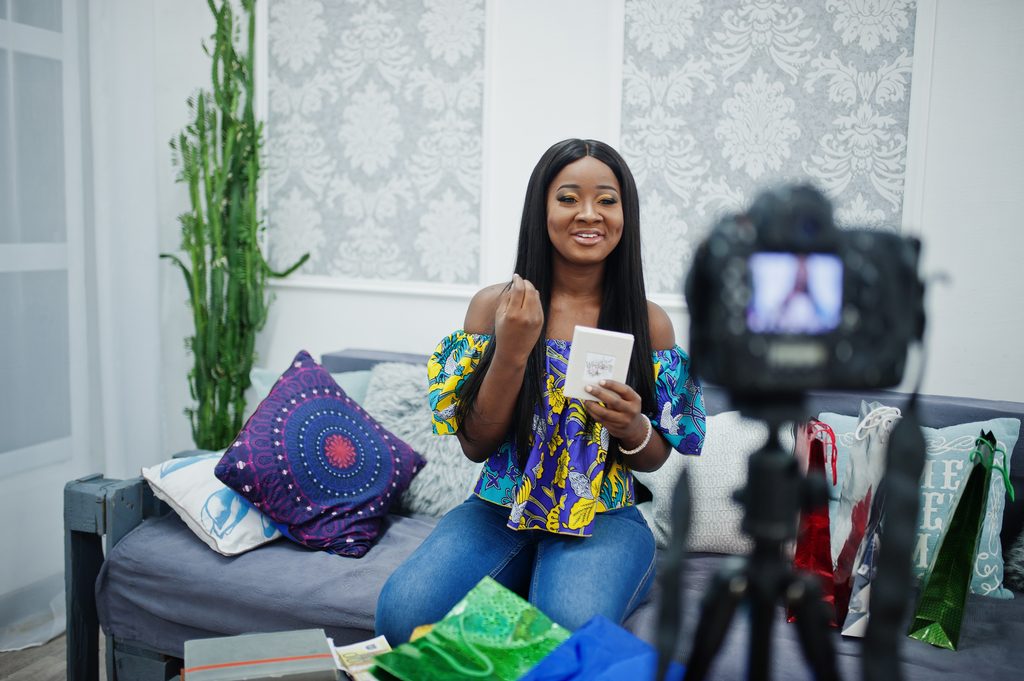
- Content authenticity: does this person actually use and critique the product on camera, or read a script someone else wrote for them
- Audience overlap with your actual target buyer, not just raw reach into a country or region that may not match your price point or use case
- Local language and cultural fluency — a creator who genuinely speaks Pidgin, Yoruba, Swahili, or Sheng to their audience reaches people a dubbed or subtitled global ad simply can’t
Structuring Campaigns That Actually Convert
Most working campaigns here mix product gifting with a fee for genuine reviewers who put real time into testing the device, plus affiliate links or discount codes so you can see what’s actually converting instead of guessing from likes and comments. Treat influencer marketing Africa as a mid-funnel trust-building tool first and a direct-response channel second, that’s honestly the order it delivers value in.
Exclusivity is worth negotiating early rather than assumed. Tech reviewers in this space often work across several competing brands in the same quarter because that’s how they earn a living; and being upfront about what you expect avoids an awkward conversation after content is already live.
The Trust Deficit Chinese Brands Actually Face
This is the part most Chinese brands skip, and it’s the part that matters most. There’s a real, documented trust gap Chinese tech brands walk into in Nigeria, Transsion’s own journey with Tecno and Infinix is the clearest reference point. Both brands had to work their way past a counterfeit-goods association and a “cheap Chinese phone” perception before they became some of the best-selling handsets in the country. They didn’t do that through advertising alone. They did it by putting real local creators in front of real local buyers, over and over, until the product’s actual performance did the talking.
A KOL strategy can close that trust gap or widen it, depending entirely on how it’s executed. Book the wrong voice, run it remotely with no local read on the room, and you reinforce every doubt the audience already has about a brand new to the market. Get the creator mix right, and KOL marketing becomes the fastest way to earn the benefit of the doubt.
Where Chinese Tech Brands Usually Get This Wrong
- Treating KOL marketing as paid media, a straight transaction for a post, rather than a relationship that needs managing over months
- Choosing reach over relevance: booking the influencer with the biggest number instead of the one their actual target buyer already trusts for tech opinions
- Running the whole relationship remotely from Shenzhen or Beijing with no local point of contact, which slows everything down and signals to the creator that nobody on the brand side understands the market they’re being asked to sell into.
See How WhirlSpot Media Can Drive Real Growth for Your Brand
- Content & PR – build authority, visibility, and trust across digital channels.
- Performance Marketing – data-driven campaigns focused on measurable ROI and demand generation.
- Corporate Events & Product Launches – plan and execute high-impact launches and brand events
Budget Reality: What This Actually Costs
This is the question every brand VP asks and almost nobody answers honestly in public. Rates in Nigeria and Kenya move constantly and vary hugely by niche, but as a rough, market-dependent sense of scale: nano and micro tech creators typically work for a mix of product plus a modest fee, mid-tier tech reviewers command noticeably more once they have a track record of driving affiliate conversions, and the handful of macro names worth booking price closer to what you’d expect for a regional celebrity endorsement. None of these numbers are fixed, they shift with the news cycle, the platform, and how badly an agency wants the placement, so treat any figure you’re quoted as a starting point for negotiation, not a rate card.
Brand Safety: The Risk Nobody Budgets For
Fake-follower markets and engagement pods are real problems in both Nigeria and Kenya, and they’re easy to miss if you’re evaluating a creator purely from a spreadsheet in another country. So is the reputational risk of a creator you’ve paired your brand with later facing public controversy. For a Chinese brand without local staff watching the ecosystem day to day, this is a genuine operational gap, not a hypothetical one. A local partner who can vet engagement authenticity and flag a creator’s history before contracts get signed pays for itself the first time it catches a problem.
What This Looks Like When a Chinese Brand Gets It Right
SHAREit Group is the clearest example I can point to directly. WhirlSpot Media ran a six-month PR and market-positioning programme for SHAREit in Nigeria that produced more than 120 total media placements, 65 of them top-tier, alongside a 2x spike in app installs and a 50 percent improvement in the brand’s Google Play Store ranking in the country. Top-tier mentions rose 50 percent over the same six months.
As Lin Lin, Overseas Marketing Manager at SHAREit Group, put it: “WhirlSpot Media is the right choice for us in Nigeria GTM.” That’s a Chinese tech brand’s own marketing lead, talking about a Nigerian go-to-market, in a piece written for exactly this reader. It’s a better proof point than any borrowed brand story, because it’s ours to stand behind.
If you’re mapping out what a tiered creator strategy, a handful of larger names for reach, plus a wider bench of smaller, closer-to-the-ground voices for trust, should look like for your own launch, that’s the exact work our KOL and influencer marketing team handles for brands entering Nigerian and East African markets.
About WhirlSpot Media
WhirlSpot Media is an award-winning integrated marketing communications and Pan-African PR firm specializing in Sub-Saharan African markets. With on-the-ground teams and deep networks across Nigeria, Kenya, South Africa, Ghana, Rwanda, Ethiopia, Uganda, Tanzania, Senegal, Cameroon, and Côte d’Ivoire, we combine global strategic expertise with unmatched local knowledge.
Our expertise spans: Technology, Healthcare, Fintech, FMCG, Gaming, Renewable Energy, Professional Services, Hospitality, Oil & Gas, and more. Ready to sell to African consumers? Email: hello@whirlspotmedia.com or Contact Us
Frequently Asked Questions
What’s the difference between a KOL and a general influencer?
Functionally, almost nothing — same role, different regional vocabulary. KOL is the term Chinese marketers use; influencer is the term more common in African and Western markets. Both describe someone whose opinion shapes their audience’s purchase decisions.
Which social platforms work best for tech brands targeting African consumers?
YouTube for in-depth reviews that resolve doubt before purchase, Instagram and TikTok for discovery and everyday product visibility, and X for real-time buzz around launches. The strongest campaigns use at least three of these together rather than leaning on one.
Should Chinese tech brands pay influencers or just send free products?
For serious campaigns, a mix of both works best. Gifting alone tends to attract creators willing to post about anything for free product, while a fee paired with the product secures more considered, higher-quality content from creators who take the review seriously.
How is KOL marketing ROI measured in African markets?
Affiliate links and unique discount codes are the most reliable way to tie a specific creator’s content to actual sales. Engagement rate and comment sentiment matter too, but sales attribution through trackable codes gives the clearest picture of what’s actually working.