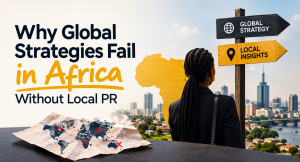

Foreign Brand Entry Into African Markets: Shoprite spent nearly two decades and hundreds of millions of rand building what it called a pan-African retail empire. At its height, the South African supermarket chain operated across 15 African countries, ran 25 stores in Nigeria alone, and processed roughly 34 million transactions a year in that single market. By 2025, it had quietly exited Nigeria, Kenya, Uganda, Ghana, Malawi, the DRC, and Madagascar retreating to the one market where it had always made money: home.
Shoprite is not a small, underfunded brand that underestimated the continent. It is one of Africa’s most recognised retail names, with deep operational infrastructure and decades of continental experience. And it still got it wrong in market after market.
Jumia raised over a billion dollars on the same premise that you could build one playbook, roll it out across Africa, and win. It listed on the New York Stock Exchange in 2019 as Africa’s first tech unicorn. By the time analysts finished writing its post-mortem, the recurring verdict was the same one Shoprite’s exit had already produced: success in African markets is not about scaling fast with imported playbooks. It is about embedding yourself in local culture, supply chains, and consumer psychology.
The brands that keep getting foreign brand entry into African markets wrong are not making random errors. They are making the same five mistakes, in the same order, with the same expensive results.

Mistake 1: Treating Africa as One Market With One Brief
This is where the damage starts.
Nigeria has 220 million people, a naira that has lost significant value against the dollar, Pidgin as a dominant cultural language, and a consumer class that is deeply mobile-first and deeply sceptical of imported products that do not speak to their reality. Egypt has 105 million people, an Arabic-first communication culture, a fintech sector growing faster than almost anywhere on the continent, and a middle class with very different purchasing behaviour. Kenya runs on M-PESA. South Africa has eleven official languages and a grocery retail culture closer to Western Europe than to West Africa.
Currency depreciation, soaring inflation, and high operational costs tied to dollar-based leases and import duties were among the specific pressures that broke Shoprite’s multi-country model. These are not continent-wide conditions. They are market-specific realities that demand market-specific strategies.
A brand brief that says “we are entering Africa” has already failed before a single campaign goes live.
Mistake 2: Skipping the Earned Media Foundation
Paid campaigns can generate awareness. They cannot generate trust. And in African markets, trust is the currency that actually converts.
African consumers, particularly in Nigeria, Kenya, and Ghana, are among the most media-savvy audiences in the world. They have seen enough imported brand messaging that does not reflect their lives to build a healthy scepticism toward advertising. What moves them is what they hear from people they respect: journalists they read, creators they follow, communities they belong to.
South African companies often entered new markets assuming their homegrown systems would translate smoothly. They underestimated how hard it is to localise in countries with different consumer behaviour, supply chains, and regulatory hurdles.
The PR and earned media gap is where foreign brands consistently leave the most value on the table. Building relationships with editors at TechCabal, Business Day, The East African, or Jeune Afrique before a brand launches costs a fraction of what a paid media blitz costs and it builds the kind of credibility that a full-page ad simply cannot replicate. By the time a brand’s paid campaign goes live, it should already have earned coverage that consumers have seen and trusted.

Mistake 3: Confusing Translation for Localisation
There is a version of “culturally adapted content” that is actually just translated content wearing a kente cloth. African consumers can spot it immediately, and it does more damage than a generic global campaign would.
True localisation is not about swapping English headlines for Swahili or Yoruba. It is about understanding the reference points, humour, aspirations, and daily realities of the audience well enough to create content that feels like it was made for them — because it was. That requires hiring local creatives, not just local translators. It requires briefing agencies who live in the market, not agencies who have studied it from a presentation deck.
The brands winning in African markets right now are the ones treating creative localisation as a strategic investment, not a compliance checkbox. For a deeper look at how this plays out in practice, WhirlSpot’s guide on influencer marketing for African brands breaks down how culturally fluent campaigns perform against imported ones.
Mistake 4: Spreading Thin Across Five Markets at Once
The instinct to move fast and wide across Africa is understandable. The continent has 54 countries, over a billion consumers, and a growing middle class. The temptation to plant a flag in as many markets as possible before competitors arrive is real.
It is also one of the most consistent reasons foreign brands run out of runway before they find product-market fit anywhere.
The brands that last pick one anchor market, go deep, build genuine consumer relationships, earn local media credibility, and let that foundation fund the move to market two. Lagos or Nairobi is a sufficient starting point for most consumer brands. The depth of those markets, combined with the media reach and investment concentration they attract, means a brand that truly wins in either city has a replicable model — and a compelling story for investors and partners in the next market.
Mistake 5: Arriving After the Infrastructure Matures
This is the mistake that has not fully revealed its cost yet but it will.
The data on where African markets are heading is not ambiguous. African startup funding hit $705 million in Q1 2026 alone, a 26.5% year-on-year jump. The BCG report on Africa’s fintech sector projects revenues growing to $65 billion by 2030 as the market moves beyond payments into credit, data, and business infrastructure. Nigeria’s data center investment is on course to hit $770 million annually by 2031, up from $132 million in 2025 — a near-sixfold increase in six years.
Microsoft, Google, and AWS are all expanding physical infrastructure across the continent right now. Google’s accelerator program for this year selected 15 African AI startups from nearly 2,600 applications — a number that reflects the quality and volume of founders now building on the continent.
When infrastructure matures at this pace, consumer expectations shift, competition intensifies, and the cost of building brand awareness rises sharply. The brands that enter during the build phase, when media relationships are easier to form, creative talent is more accessible, and digital advertising is less crowded, will carry structural advantages over every brand that waits for a cleaner signal.

What the Smart Ones Do Differently
The brands that execute foreign brand entry into African markets well share three habits.
They choose one market and go deep before going wide. They invest in earned media and local PR relationships before their first paid campaign launches. And they treat creative localisation as a product decision, not a marketing afterthought.
None of these are complicated. All of them require the willingness to move at the pace of the market rather than the pace of the head office approval process.
What to Do in the Next 90 Days
If your brand is serious about Africa, the next 90 days should include three things:
One — identify your anchor market and audit what local media, creators, and PR infrastructure looks like there. Two — map the earned media landscape: which journalists cover your sector, which editors are worth building relationships with, which creators hold genuine consumer trust in your category. Three — audit your existing brand assets for cultural fit, not just language. What reads as aspirational in London may land as tone-deaf in Lagos.
The window to enter before the competition gets crowded is open. It is not going to stay that way.
If you want to think through what a market entry strategy looks like in practical terms for your brand, WhirlSpot Media works with foreign brands navigating African market entry , from earned media strategy to culturally grounded PR. Start the conversation before your competitors do.