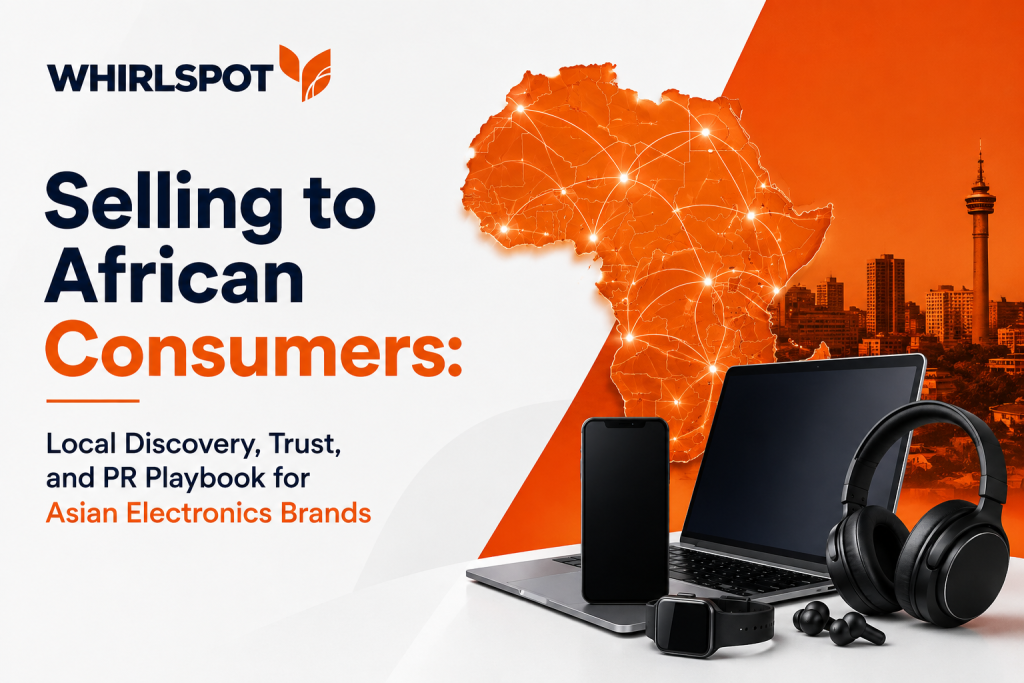

African consumers adopt new tech hardware cautiously and typically only after a reliable peer recommends it, just like anyone evaluating a high-stakes purchase. If you oversee market expansion for a South Korean, Chinese, or Japanese consumer electronics company that is interested in South Africa, Kenya, or Nigeria, that fact should be given far more weight than any market size slide in your pitch deck.
A gadget is put on a store display by awareness, but it’s trust that gets it through the register.
I’ve spent enough afternoons in Lagos consumer electronics markets, where a trader will unbox three different phones for you before you’ve even mentioned your budget, to know that boardroom assumptions about African consumers rarely make it to the actual market. So let’s go over what I’ve actually seen on the ground.
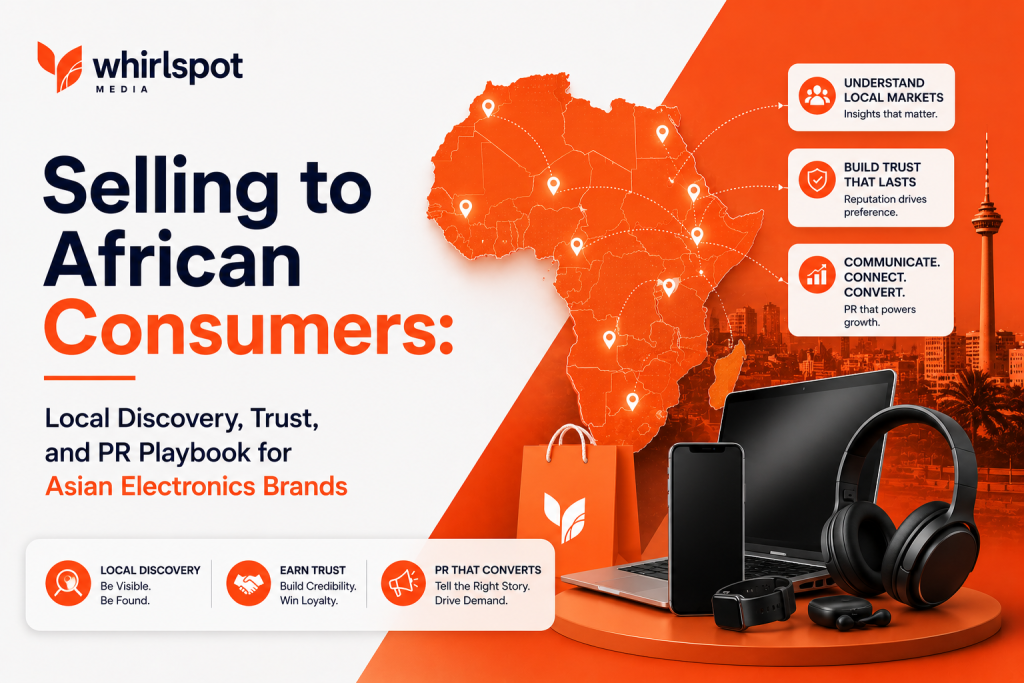
Why This Matters More for Asian Consumer Electronics Brands
This is the difficult part. You’re not entering a vacant space. Together with Samsung, Tecno, Infinix, and Itel, all owned by the Chinese corporation Transsion, they already enjoy significant shelf space and increased brand awareness throughout West and East Africa. By late 2023, Transsion alone held roughly 48 percent of the African smartphone market, almost double Samsung in second place. So the question a new Asian electronics brand should answer is not “Do people know Asian phones?” because they already do. The real question is why anyone would trust your brand over the several others on the same shelf.
Buying consumer electronics in West Africa entails a completely different risk profile than buying a bag of rice or shampoo. When a smartphone dies after three months or a faulty power bank fries a motherboard, it is more than just an inconvenience; it is a devastating blow to a family’s disposable income. This single financial reality shapes how African consumers discover, evaluate, and trust technology. Any brand that fails to understand this post-purchase anxiety will deplete marketing budgets long before gaining market share.
How African Consumers Discover New Tech Products
Mobile First, Social First, In That Order
Nobody I’ve seen shop for a phone in Lagos begins on a desktop. Discovery occurs through WhatsApp status updates, TikTok unboxing clips, Instagram reels from local tech reviewers, and, increasingly, X threads in which someone asks “Is this brand any good?” and receives forty responses within an hour. Paid banner ads pale in comparison to a cousin’s WhatsApp forward or a video shared by a trusted reviewer.
Affordability shapes this too. GSMA has been pushing initiatives for sub $40 smartphones specifically because device cost, not network coverage, is still the biggest barrier to getting more Africans online. When price is that tight a constraint, people research harder before they buy, not less. They ask around. They watch three reviews instead of one. That is actually good news for a brand willing to earn trust properly instead of just buying reach.
Physical Retail Still Closes the Sale
Here is something a lot of foreign brand teams get wrong: digital discovery in Nigeria rarely ends in a digital purchase, especially for electronics. Someone sees a phone on TikTok, then goes to a market or a phone plaza to physically hold it, check the screen, and ask the trader questions, and only then buys, sometimes from that trader, sometimes online afterward, once they feel reassured. If your go-to-market plan is purely digital with no visible physical presence, you are cutting off the exact step where African consumers actually decide to commit money.

Why Trust Is the Real Barrier, Not Awareness
The Counterfeit Problem Nobody Warns You About
Fake phones, fake chargers, fake earbuds – this market has seen all of it, and it has left a scar. This is not an exaggeration either. Philips once estimated that more than half of the Philips branded products sold across Nigerian markets were counterfeit, which is why the company had to run an active, on-the-ground consumer education campaign just to help buyers tell real from fake. If a household name with decades of presence still had to fight that hard for trust, imagine the starting position of a brand nobody has seen on a shelf before.
That scepticism is the default reaction to any unfamiliar brand, and it hits harder if you have zero local retail footprint when you launch.
What Actually Builds Trust
Based on what I’ve seen work and what has consistently failed, trust is built through a fairly specific combination. Peer recommendations consistently outperform brand messaging. A credible local tech reviewer who uses the device for two weeks and then posts an honest review carries more weight than a month of paid advertisements. Visible after-sales support, an actual service centre, a real warranty process, and someone to call when something breaks all indicate that you are not just here to sell and then disappear. Earned media coverage in outlets people already respect works as a kind of borrowed credibility too, because a third party vouching for you lands differently than you vouching for yourself. This is part of why KOL and influencer partnerships tend to outperform straight media spend for a brand nobody has heard of yet.
Transsion is the most obvious example of this in the region. The company did not out-advertise Samsung or Apple; rather, it engineered for local reality. Its phones shipped with camera software tuned for darker skin tones, exceptionally long battery life to survive frequent power outages, and multiple SIM card slots so users could jump between networks for the cheapest rates. The Council on Foreign Relations described this as building phones with African consumers’ actual needs in mind, rather than adapting a global product after the fact. That is the true lesson for a new entrant: trust was not purchased with a larger budget; it was earned by solving problems that big global brands were not even considering.
The Value Perception Paradigm in African Consumer Tech
- Aspiration Over Price Wars: Constrained household budgets do not equal a demand for cheap goods. Consumers are aspirational and status-conscious about their personal technology.
- Value Justification Wins: Market share belongs not to the cheapest entrant, but to the brand that visibly validates its price-to-performance ratio.
- Proving the Premium: For higher-priced consumer electronics brands competing against low-cost market entrants, the battle is not won through discounting; it is won by establishing that the premium price tag delivers real reliability and social proof
See How WhirlSpot Media Can Drive Real Growth for Your Brand
- Content & PR – build authority, visibility, and trust across digital channels.
- Performance Marketing – data-driven campaigns focused on measurable ROI and demand generation.
- Corporate Events & Product Launches – plan and execute high-impact launches and brand events
What This Means for a New Asian Electronics Brand Entering the Market
Simply put, before you spend a single dollar on paid advertising, start with credible local reviewers. Get your after-sales infrastructure in place before launch, rather than six months later when complaints begin to pile up. Use earned PR to establish institutional credibility first, and then layer performance marketing on top of that foundation rather than replacing it.
Consider launching an authenticity education campaign from the start rather than waiting for a counterfeit problem to force your hand, as Philips eventually did. A simple, visible “how to spot the real thing” campaign at launch, tied to your retail partners, serves two purposes: it protects your brand and signals to sceptical buyers that you take their money seriously. All of this is simple, but it does require patience, which is something that most new entrants underestimate.
If you are still mapping out whether your specific market and sector make sense before any of this, that is really a market opportunity assessment conversation first; everything above only works once you know which market you are actually building trust in.
We have written before about the broader groundwork foreign brands skip when they enter African markets, worth a read if you have not seen it: How to Launch a Business in Africa: A Guide for International Businesses.
Frequently Asked Questions
How do African consumers discover new tech products?
Mostly through mobile and social channels, WhatsApp forwards, TikTok unboxings, Instagram reels from local reviewers, and peer conversation, rather than desktop search or banner ads. Physical retail then plays a confirming role, where people go to see and touch a device before finally buying it.
Why is trust harder to earn than awareness for a new electronics brand?
Trust cannot be purchased through media spending, but awareness can. Electronics pose a real financial risk if a device fails, and previous experiences with counterfeit products have made scepticism the default reaction to any unfamiliar brand, regardless of advertising budget size.
Do African consumers research online before buying electronics in person?
Yes, and often very thoroughly. Because budgets are tight, people prefer to read multiple reviews, consult with friends and family, and compare options online before visiting a market or store to make a final decision in person.
How should Asian electronics brands adapt their global marketing campaigns for African consumers?
Global campaign templates focused purely on technical specifications often fail to convert. In Africa, marketing must address local consumer utility and risk. Strategy should pivot toward localized storytelling highlighting battery performance during power fluctuations, local camera color calibration, device trade-in/upgrade options, and local language or Pidgin social commerce campaigns via mobile platforms like WhatsApp, TikTok, and Instagram.
How important are local reviewers and KOLs for tech brand credibility?
For a brand entering the market for the first time, this is extremely important, perhaps even more important than traditional advertising. A trusted local reviewer’s honest verdict serves as social proof in ways that paid advertisements simply cannot match.
What is the most effective PR and marketing channel for reaching African tech consumers?
Word-of-mouth and social proof outweigh standard digital ad impressions. The most effective strategy combines peer-to-peer social commerce channels (like WhatsApp, Instagram, and TikTok), localised creator partnerships, hands-on experiential retail activations, and earned media reviews that validate product reliability before purchase.
Is price the main factor in electronics purchase decisions in Africa?
It is important, but it is not the whole story. Consumers are budget-conscious while also being brand- and status-conscious, so the winning position is rarely the cheapest option; it is clearly worth the asking price.
What is the biggest mistake new Asian electronics brands make when entering African markets?
Treating the market as entirely digital, with no visible physical presence or after-sales infrastructure at launch. Discovery may begin online, but trust and the final purchase decision are still established through a genuine, local, accountable presence.
About WhirlSpot Media
WhirlSpot Media is an award-winning integrated marketing communications and Pan-African PR firm specializing in Sub-Saharan African markets. With on-the-ground teams and deep networks across Nigeria, Kenya, South Africa, Ghana, Rwanda, Ethiopia, Uganda, Tanzania, Senegal, Cameroon, and Côte d’Ivoire, we combine global strategic expertise with unmatched local knowledge.
Our expertise spans: Technology, Healthcare, Fintech, FMCG, Gaming, Renewable Energy, Professional Services, Hospitality, Oil & Gas, and more. Ready to sell to African consumers? Email: hello@whirlspotmedia.com or Contact Us