
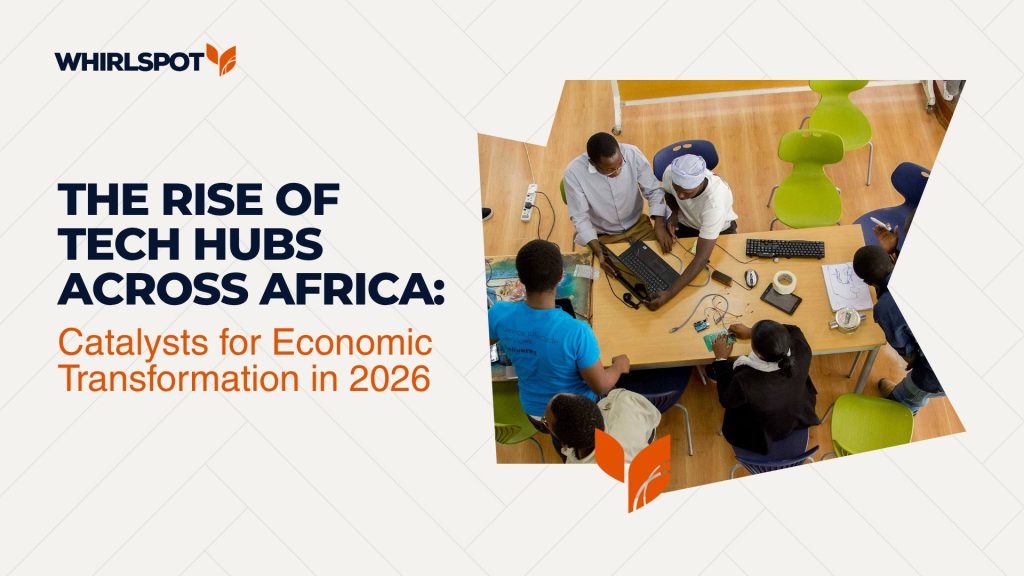
When you walk through any floor of a Lagos tech hubs today, you’ll feel the density of ideas, the urgency of execution, and the quiet confidence of founders. The same energy is present in Nairobi’s Silicon Savannah, Kigali’s government-backed innovation corridors, in Cape Town’s startup precincts, and in Cairo’s expanding digital ecosystem. Africa’s tech revolution in 2026 is an infrastructure, a policy and a profit.
The foundation was established many years ago. The International Trade Centre reported that Africa had more than 1000 tech hubs in 2024, which represents nearly double the 600 tech hubs that the GSMA documented in 2019. The 2026 period demonstrates its unique qualities through established hubs which now operate at advanced maturity levels.
African tech crossed $3 billion in funding in 2025, which is a 44% increase from 2024, because African startups now access different types of funding through their debt facilities, securitisations and receivables financing.
African startups raised $575 million across 58 deals in the first two months of 2026, with logistics, transport, and energy startups capturing a growing share as investors backed companies building mobility and infrastructure systems.
The Tech Hubs Anchoring Africa’s Digital Future
Lagos remains Africa’s undisputed startup powerhouse. With over 430 fintech companies and roughly 28% of Africa’s fintech market share, Nigerian fintechs have evolved beyond consumer payments into critical financial infrastructure, facilitating remittances, expanding banking access, and building the rails of digital commerce. 2026 is expected to be the year Nigeria launches its first AI data centres, as the country deepens its investment in intelligent digital infrastructure.
Nairobi continues to write the playbook that the world studies. Kenya leads in mobile money innovation, anchored by M-Pesa, maintains a business-friendly regulatory environment, and raised $227 million in startup funding in the first half of 2025 alone.
Kigali is executing the most precise tech vision on the continent. With 95% 4G coverage across Rwanda, the Kigali Innovation City project, a $300 million development backed by Carnegie Mellon University Africa, is expected to generate 50,000 jobs and $150 million in economic impact, positioning Rwanda as East Africa’s model for policy-driven tech transformation.
Cairo, Cape Town, Accra, and Dakar are established forces. The rapid rise of ICT hubs in cities such as Accra, Cape Town, and Nairobi showcases Africa’s ability to leapfrog into high-value services, nurturing a new generation of entrepreneurs and innovators, according to Brookings‘ Foresight Africa 2026 report.
See How WhirlSpot Media Can Drive Real Growth for Your Brand
- Content & PR – build authority, visibility, and trust across digital channels.
- Performance Marketing – data-driven campaigns focused on measurable ROI and demand generation.
- Corporate Events & Product Launches – plan and execute high-impact launches and brand events
What’s Actually Changing in 2026
This year marks a critical inflection point for African tech.
In 2026, countries like Nigeria, Kenya, South Africa, and Egypt are forming regional oligopolies through aggressive acquisition strategies, with analysts predicting the emergence of 3 to 4 massive super-conglomerates dominating fintech and logistics across the continent.
In an extraordinary shift in Q3 2025, clean energy surpassed fintech as Africa’s top-funded sector, capturing 53% of investment with corporate venture capital surging into B2B infrastructure, including regtech, embedded finance, and trade platforms.
As of 2026, Africa’s digital evolution is moving beyond digitisation toward intelligence systems that anticipate user needs, automate workflows, and integrate across platforms, with Nigeria at the centre of this transition as the continent’s largest economy and one of its most dynamic technology hubs.
The Economic Case Is Now Undeniable
By 2026, Africa’s tech hubs will be at the centre of the continent’s economic momentum, shaping how Africans build companies, create jobs, and connect to global markets with universities, investors, regulators, and accelerators working in closer alignment than at any previous point. As of early 2026, Africa has produced 11 unicorns, with 131,000 startups collectively raising $174 billion across all funding rounds — and $370 million in equity funding rounds in the first quarter of 2026 alone.
Meanwhile, the African tech industry might surpass $4 billion in funding, approaching the record $4.6 billion raised in 2022, with the question no longer being whether capital will return to Africa, but whether it will fuel the next generation of billion-dollar companies that will address the continent’s existing critical problems.
Conclusion
Reliable power, affordable broadband, and late-stage capital remain unevenly distributed across regions. Regulatory frameworks vary wildly across 54 countries, creating friction for startups operating at scale. Without massive local investment in power and data centres, Africa risks becoming a consumer of foreign AI tools rather than a creator of them, a distinction that will define whether the continent captures or cedes its most valuable economic frontier.
African tech hubs in 2026 are contributing original ideas to global challenges, from inclusive finance to climate resilience, with products built for African realities proving adaptable across other fast-growing markets worldwide.
At Whirlspot Media, we craft content strategies that put African businesses, innovators, and ecosystems at the centre of the global conversation. If your brand is building, investing, or operating in Africa’s tech and economic landscape, we help the world hear your story with clarity and credibility. Send us an email on hello@whirlspotmedia.com