


The boardrooms have made their decision. Africa isn’t waiting anymore.
Here’s what changed: In 2019, when you mentioned “Africa” in a strategy meeting, someone would nod politely and say “interesting potential.” In 2026, that same mention triggers urgent questions: “Which markets?” “When do we launch?” “Who’s our local partner?”
The shift isn’t subtle. It’s seismic.
Africa’s collective GDP crossed $3.4 trillion last year. By 2050, the continent’s population will double, meaning two billion people, most of them young, mobile-connected, and hungry for brands that understand them. This isn’t a forecast anymore. Walk through Lagos’s tech hubs, Nairobi’s coworking spaces, or Kigali’s innovation centers and you’ll see it: the future is already here, it’s just unevenly distributed.

But here’s what the headlines won’t tell you: a massive market doesn’t guarantee enormous success. Africa isn’t one thing. It’s 54 countries, thousands of languages, and regulatory environments that shift from border to border. The brands winning here aren’t the ones with the biggest budgets; they’re the ones with the sharpest cultural intelligence and the most sophisticated local partners.
This is your roadmap. Not to “entering Africa” (that phrase is already outdated), but to winning in Sub-Saharan Africa’s highest-growth markets.
The Numbers That Should Keep Your Competitors Awake
Africa’s Youth Advantage: The World’s Largest Untapped Consumer Base
While Europe and East Asia worry about ageing populations, Africa is getting younger. The median age across the continent? 19 years old. By 2030, one in five people globally will be African.
Here’s what that means for your brand: You’re not marketing to cautious, brand-loyal consumers who’ve been buying the same products for decades. You’re reaching the most digitally native, socially connected generation in human history; a demographic that expects brands to reflect their identity, not lecture them about it.
Real-world snapshot: In 2024, Nigerian Gen-Z consumers switched mobile network providers an average of 2.3 times—not because of price, but because of data speed and customer service responsiveness. They’re not locked in. They’re shopping for brands that respect their time and understand their lives.
The AfCFTA: Africa’s $3.4 Trillion Single Market
The African Continental Free Trade Area launched in 2021, and it’s already reshaping how smart brands think about expansion. Before AfCFTA, selling across African borders meant navigating 54 different tariff systems. Now, the agreement eliminates tariffs on 90% of goods and systematically dismantles non-tariff barriers.
What this means strategically: You could launch in Rwanda and use it as a hub to serve Kenya, Tanzania, Uganda and beyond. You could manufacture in Ghana and distribute across West Africa without starting from scratch in each country. The “Africa is too fragmented” excuse? It expired three years ago.
See How WhirlSpot Media Can Drive Real Growth for Your Brand
- Content & PR – build authority, visibility, and trust across digital channels.
- Performance Marketing – data-driven campaigns focused on measurable ROI and demand generation.
- Corporate Events & Product Launches – plan and execute high-impact launches and brand events
The Urbanization Wave: Half of Africa Will Live in Cities by 2040
Africa is urbanizing faster than any continent in history. By 2040, 50% of Africans will be city dwellers. For FMCG brands, logistics operators, and real estate developers, this isn’t just a trend—it’s the defining commercial shift of the next two decades.
What it looks like on the ground: Lagos adds roughly 77 new residents every hour. Nairobi’s middle class is projected to grow by 35% by 2028. Accra’s real estate prices in premium districts have doubled since 2020. The infrastructure is racing to keep up, and the brands that invest now are locking in first-mover advantages that will compound for years.
The Cluster Strategy: Where to Launch (And Why “Africa” Isn’t Specific Enough)

Trying to crack “Africa” as a single market is like trying to crack “Europe” without distinguishing between Germany and Greece. Here’s how strategic brands think about it: cluster by cluster, market by market.
Nigeria: The Giant That Moves Fast

Population: 220+ million
Why it matters: Nigeria isn’t just Africa’s largest economy, it’s the creative and cultural engine of the continent and a non-negotiable priority for successful market entry in Africa. Afrobeats isn’t a genre; it’s a global export, and Nollywood now produces more films annually than Hollywood. As the heart of both African entertainment and tech innovation, Nigeria serves as the ultimate proving ground for brands looking to establish a dominant presence in the region
Nigeria remains the “Prize of Africa.” Despite currency fluctuations, its sheer scale makes it impossible to ignore for any brand with global ambitions.
- Key Industries: Fintech, FMCG (Fast-Moving Consumer Goods), Telecommunications, and Creative Industries.
- Strategic Advantage: A massive, young, and highly entrepreneurial population. Lagos is a global tech hub, receiving the lion’s share of venture capital on the continent.
- The WhirlSpot Perspective: In Nigeria, “Glocal” (Global + Local) is the only way forward. Brands must navigate a hyper-competitive landscape where cultural resonance and PR “on the ground” are more effective than traditional top-down advertising.
The sectors booming right now:
- Fintech (Nigeria processed over $2 billion in mobile payments in Q4 2024 alone)
- FMCG (the market for packaged goods grew 18% last year despite currency headwinds)
- Telecommunications (5G rollout is accelerating faster than predicted)
- Energy (solar mini-grids are solving the “last-mile” power problem)
How to win here: Nigeria rewards brands that go grassroots. Yes, you need polished digital campaigns. But you also need to understand that Lagos, Abuja, and Kano are three different markets with distinct consumer behaviours. The brands crushing it here don’t just advertise—they co-create with local influencers, sponsor community events, and show up where Nigerian consumers actually live their lives.
Real talk: Currency volatility is real. The Naira fluctuates. But companies like Unilever and Nestlé have been here for decades and continue to post double-digit growth because they price locally, source locally, and communicate like locals. Nestle Revenue growth in prior years: moved from ₦351.82 billion in 2021 to ₦547.12 billion in 2023 (average annual growth around 25–30%), fueled by resilient demand in food and beverages.
Kenya: The Innovation Hub of East Africa
Population: 55+ million
Why it matters: Kenya invented mobile money. M-Pesa processes more transactions annually than Western Union. This is the most digitally sophisticated market in East Africa, and it’s not close.
Market Overview: A stable political environment and a highly educated, English-speaking workforce make Kenya a favorite for tech and service-oriented firms.
Strategic Advantage: Ease of doing business and a strategic location as a gateway to the 300-million-person EAC market.

The sectors leading growth:
- Agtech (Kenya’s agricultural tech startups raised $230 million in 2024)
- Fintech (Nairobi is home to over 200 fintech companies)
- Renewable energy (solar and wind projects are attracting billions in foreign investment)
- Tourism (rebounding post-pandemic with upscale safari experiences)
How to win here: Kenya’s consumers are educated, skeptical, and comparison-shop relentlessly. You can’t just show up with a flashy ad campaign. You need thought leadership. You need case studies. You need to demonstrate that you understand the market’s nuances.
Insider insight: PR matters more here than anywhere else on the continent. A feature in Business Daily Africa or an interview on Citizen TV can move markets. Content consumption in Kenya is highly digital. Brands here must prioritize sophisticated PR, integrated digital, social commerce and thought leadership to compete in a crowded, innovation-heavy landscape.
South Africa: The Sophisticated Gateway
Population: 60+ million
Why it matters: South Africa has the continent’s most mature financial markets, the most sophisticated supply chains, and serves as the launchpad for the entire SADC region (16 countries, 360 million people).

Strategic Advantage: High ease of doing business, advanced legal frameworks, and a launchpad for the SADC (Southern African Development Community) region.
The sectors driving investment:
- Mining (still dominant, but now focused on “green” minerals like lithium)
- Manufacturing (especially automotive and pharmaceuticals)
- Retail (South African chains are expanding aggressively across the continent)
- Professional services (legal, consulting, financial advisory)
How to win here: South Africa is acutely sensitive to transformation and social impact. If your ESG strategy is an afterthought, you’ll struggle. Brands that lead with corporate social responsibility, commit to B-BBEE (Broad-Based Black Economic Empowerment) targets, and transparently report on transformation goals earn trust. Insight: South Africa is a highly sensitive market regarding social impact and transformation. Corporate Social Responsibility (CSR) and ESG (Environmental, Social, and Governance) must be core to any PR strategy here.
What’s shifting: The narrative is moving beyond Johannesburg and Cape Town. Secondary cities like Durban and Port Elizabeth are emerging as investment hubs with lower costs and untapped consumer bases.
Rwanda: Africa’s Business-Friendly Testbed
[Suggested image: Kigali’s modern Convention Centre or clean streets with tech entrepreneurs]
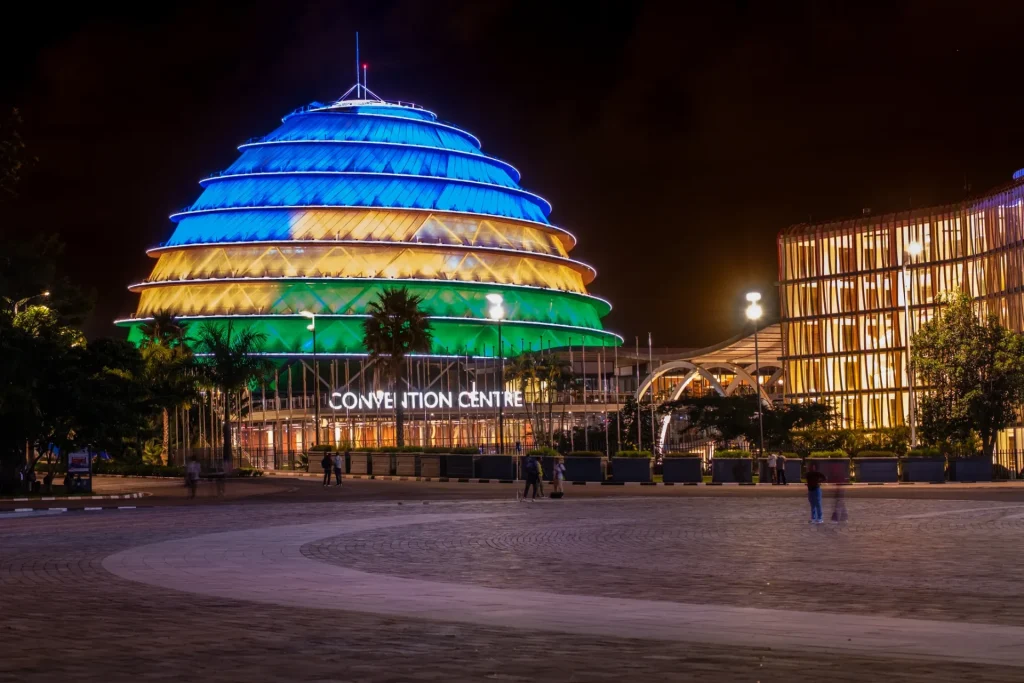
Population: 13+ million
Why it matters: Rwanda ranks 38th globally in the World Bank’s Ease of Doing Business index—higher than Spain or Italy. You can register a business in six hours. Corruption is near-zero. Government efficiency is world-class.
The sectors attracting attention:
Rwanda has transformed into a premier destination for corporate headquarters.
- Ranked exceptionally high for transparency and ease of business registration. It is a “test-bed” market for new technologies.
- ICT (Kigali is positioning as Africa’s tech hub with fiber infrastructure and data center investments)
- MICE (Meetings, Incentives, Conferences, Exhibitions—the government is aggressively courting international events)
- Green energy (Rwanda’s goal: 100% renewable energy by 2030)
How to win here: Align with national development priorities. Rwanda’s government is hands-on and strategic.
The WhirlSpot take: Rwanda is the perfect “pilot market” for testing new tech or business models before scaling across East Africa. Low risk, high visibility, fast feedback loops.
Rwanda’s market values efficiency and government alignment. A PR strategy here should focus on sustainability and national development goals.
Ghana: West Africa’s Stability Champion
Population: 33+ million
Why it matters: Ghana has had peaceful democratic transitions for over three decades—rare on the continent and priceless for investors. Add in the “Year of Return” movement that brought diaspora investment flooding back, and you have a market with deep cultural pride and growing purchasing power.
Ghana is frequently the first choice for brands entering West Africa due to its political stability and welcoming business environment.
Strategic Advantage: Growing middle class and a strong “Returnee” economy (diaspora investment).

The sectors gaining momentum:
- Oil and gas (offshore discoveries continue to reshape the energy landscape)
- Cocoa processing (Ghana is moving from raw exports to value-added chocolate manufacturing)
- Gold mining (one of the world’s top 10 producers)
How to win here: Cultural storytelling isn’t optional, it’s the entry code. Ghanaians deeply value brands that respect their heritage, honor their history, and contribute to community development. The brands that win here don’t just sponsor events; they become part of the national story. WhirlSpot Insight: Brands that align themselves with Ghanaian heritage and “The Year of Return” spirit find deep resonance with consumers.
Street-level insight: Accra’s middle class is exploding, and they’re spending on experiences, dining, entertainment, travel. If your brand can tap into that aspirational energy, you’ll grow faster here than in more saturated markets.
The Reality Check: What Can Go Wrong (And How to Avoid It)
Let’s be honest—Africa isn’t all opportunity and sunshine. The brands that succeed here are the ones that see challenges clearly and plan around them.
Challenge 1: Currency Volatility
The Problem: Exchange rates fluctuate. The Nigerian Naira, the Ghanaian Cedi, and the Kenyan Shilling have all experienced significant swings in recent years.
The Solution: Don’t fight the local currency, embrace it. Build flexibility into your supply chain so you can source locally when imports become too expensive. Brands must find a balance between maintaining global margins and staying affordable for local consumers. Companies like Dangote and Ecobank thrive here because they think in local terms, not just dollar conversions.
Challenge 2: Regulatory Fragmentation
The Problem: Every country has its own regulatory body. What passes Nigeria’s NAFDAC approval process won’t automatically clear Kenya’s Bureau of Standards. Each country has its own rules, its own bureaucracy, its own timeline.
The Solution: Partner with firms that live and breathe these markets.
Challenge 3: Infrastructure Gaps
The Problem: Power supply can be unreliable. Roads in rural areas can be unpaved. “Last-mile” delivery is harder than your logistics team is used to.
The Solution: Successful market entry in Africa requires more than just a product; it requires operational resilience. Smart brands invest in their own infrastructure rather than waiting for state-led solutions. They partner with off-grid solar providers for power continuity and leverage motorcycle couriers for last-mile delivery in congested cities like Lagos or Nairobi. Ultimately, they don’t wait for governments to solve infrastructure gaps—they build around them to guarantee a seamless market entry in Africa.
Case in point: When Jumia (Africa’s largest e-commerce platform) launched, they didn’t complain about poor addressing systems—they built their own geo-location tech and trained couriers to navigate using landmarks. That’s how you win.
WhirlSpot success story: When WorkPay, a Kenyan HR and payroll fintech, wanted to launch in Nigeria, they partnered with WhirlSpot for a strategic market entry. We executed a targeted soft launch in Lagos that attracted 50+ high-net-worth attendees—HR professionals, business owners, tech entrepreneurs, and investors. The result? Post-launch, WorkPay expanded to a growing active clients across Africa. By 2024, they’d secured a $5M funding round.

The Digital Playbook That Actually Work in Africa
Target Hyper-Local Keywords
Don’t optimize for “fintech in Africa.” That’s too broad and too competitive. Instead, go specific:
Why this works: African consumers search locally. They want solutions for their city, their country, their specific problem. Ranking for hyper-local keywords means you’re showing up exactly when someone is ready to act.
Mobile-First Isn’t Optional—It’s the Only Option
Over 70% of African web traffic comes from mobile devices. In some markets, it’s closer to 85%. Your site needs to:
- Load in under 3 seconds on 3G networks
- Display perfectly on screens as small as 5 inches
- Use progressive web app (PWA) technology where possible
Real impact: When Safaricom optimized their site for mobile-first, their bounce rate dropped 40% and conversions increased 28%. Speed matters. Simplicity matters. Respect your users’ data constraints.
Build Trust with E-E-A-T Content
Google’s algorithm prioritizes Experience, Expertise, Authoritativeness, and Trustworthiness. In African markets, this means:
- Publish case studies from real companies operating in these markets
- Feature testimonials from local business leaders
- Write whitepapers that cite local data, not just global statistics
- Guest post on respected African business publications like Business Day, The East African, or Daily Maverick
The payoff: When your brand is cited by trusted local media, search engines notice. Your domain authority climbs. You start ranking for competitive keywords without buying ads.
Social Commerce Is Where the Action Is
In Africa, Instagram isn’t just for pretty pictures—it’s a sales channel. WhatsApp isn’t just for chatting it’s where deals close. TikTok isn’t entertainment—it’s product discovery.

Strategic move: Identify micro-influencers (10K–100K followers) who have genuine engagement, not just follower counts. Partner with them for authentic product reviews, unboxing videos, and “how I use this” content. African consumers trust peer recommendations more than brand messaging.
Why Western Templates Fail (And What Works Instead)
Here’s the uncomfortable truth: Most global PR agencies don’t understand Africa. They’ll take a campaign that worked in London or New York, translate it into local languages, and call it “localized.” Then they’ll wonder why it flopped.
What they miss:
- Humor translates differently across cultures (a joke that lands in Johannesburg can offend in Kigali)
- Social etiquette varies wildly
- Media relationships require years of trust-building (you can’t just “blast” a press release and expect coverage)
What WhirlSpot does differently:
We don’t parachute in with ready-made solutions. We start by listening. We map your brand values against local cultural norms. We identify which messages will resonate and which will backfire. We build campaigns from the ground up, not from the template library down.
WhirlSpot Media is an award-winning PR and integrated marketing agency specializing in African market entry. We help brands break into the continent’s most vibrant markets through integrated PR, local expertise, and proven market-entry strategies. Recent awards:
- Outstanding PR Agency of the Year – Marketing Edge Awards 2025
- Pan-African Marketing and PR Agency of the Year – Made in Nigeria Awards 2025
- Outstanding Contribution to Startup – Media Consortium Awards 2025
These aren’t vanity trophies—they represent proven success helping brands like EcoFlow, SHAREit Lite break into key African markets and scale rapidly.
As members of the GlobalCom PR Network spanning over 100 countries, we combine international reach with deep local expertise across Nigeria, Kenya, South Africa, Ghana, Rwanda, Ethiopia, Uganda, Tanzania, Senegal, Cameroon, and Côte d’Ivoire.
Our Integrated Approach

1. Strategic PR and Media Relations
We maintain active relationships with over 200 journalists, editors, influencers and producers across Sub-Saharan Africa. When your story needs to break, we know who to brief, how to pitch it, and which outlets will give it the credibility your brand needs.
Real results: For Reliance Health, one of Nigeria’s leading digital healthcare providers, we secured 45+ media placements including front-page coverage in Forbes Africa, Business Day Nigeria, Arise TV and ThisDay. The campaign generated 25 million in online readership reach, 12-15 high-authority backlinks (DA 70+), and positioned their CEO Dr. Femi Kuti as a thought leader in digital healthcare. The brand is now at the forefront of shaping conversations around telemedicine, workplace wellness, and preventative healthcare in Africa.

2. Cultural Intelligence and Localization
Translation is easy. Localization is an art. We adapt your brand voice to match local sensibilities without losing your core identity. This means understanding that:
- Kenyans value professionalism and data-driven arguments
- Nigerians respond to bold, confident messaging with personality
- Ghanaians appreciate humility and community-focused narratives
- South Africans expect transparency and social accountability
3. Crisis and Reputation Management
African markets move fast. Political shifts, regulatory changes, and economic volatility can turn a good news cycle into a crisis overnight. We provide:
- Proactive crisis mapping (identifying vulnerabilities before they explode)
- Rapid-response teams (we’ve managed crises that broke at 2 AM and needed resolution by sunrise)
- Stakeholder communication strategies (keeping governments, media, and consumers aligned during turbulence)
4. Digital Growth and Influencer Partnerships
We don’t chase follower counts. We chase influence. The difference? A Lagos-based fashion influencer with 50K engaged followers will drive more sales than a celebrity with 2 million disengaged ones. We vet influencers for authenticity, audience alignment, and conversion potential—then we negotiate partnerships that deliver ROI, not just impressions.
Proven impact: For Sleeper’s expansion into Nigeria, we led a definitive 5-month market entry strategy. By combining a comprehensive market assessment with a high-impact digital campaign, we successfully positioned the US-based fantasy sports platform for local adoption, delivering:
Impact & Acquisition
- 55,000+ App Installs with a 39% activation rate, resulting in 21,450 active users.
- 10M+ Social Impressions across X (Twitter), Facebook, TikTok, and Telegram.
- 14,000+ New Followers gained across all community channels.
PR & Influence
- 25 Strategic Influencer Partnerships featuring top Nigerian sports personalities.
- 8+ Earned Media Placements in tier-one publications like Complete Sports, reaching a readership of 10M+.
- $7,500+ in Ad Value Equivalent (AVE) generated purely through organic coverage.
The Strategy
We drove these results by embedding Sleeper into the local culture. The campaign moved beyond standard ads, utilizing immersive Twitter Spaces with football fans, high-energy on-ground activations, and culturally relevant content that positioned Sleeper not just as an app, but as the go-to home for Nigerian sports enthusiasts.
Your Five-Phase Market Entry Framework
If you’re serious about Africa, here’s the blueprint we’ve used with clients from fintech to FMCG to tech startups.
Phase 1: Market Intelligence and Feasibility
What we do:
- Deep-dive consumer research
- Competitive landscape mapping (who’s already here, what’s working for them, where are the gaps)
- Regulatory audit (what licenses do you need, how long will approvals take, what are the hidden compliance costs)
Outcome: A detailed feasibility report that tells you not just if you should enter, but when, where, and how.
Real example: For a Nigerian health-tech startup providing affordable micro-health insurance, our market intelligence helped them identify untapped communities. We then executed a data-driven PR campaign that secured 32+ top-tier media placements reaching 10M+ impressions. The coverage positioned the brand as the authority on microhealth insurance for marginalized communities.
Phase 2: Strategic Positioning
What we do:
- Define your “African Voice” (how does your global mission solve a specific local problem?)
- Craft your narrative (the story that makes your brand relevant, not just available)
- Identify your differentiation (why should consumers choose you over the 10 competitors already here)
Outcome: A positioning framework that guides every piece of content, every campaign, every customer touchpoint.
Phase 3: Pilot and Soft Launch
What we do:
- Select a pilot city (usually Lagos, Nairobi, Cape town or Dakar depending on your sector)
- Launch with limited inventory or a beta version of your service
- Gather real-time feedback and iterate quickly
Outcome: Validated product-market fit before you scale. You learn what works, what doesn’t, and what needs tweaking—without burning your entire budget.
Phase 4: Full-Scale Integrated Launch
What we do:
- Deploy a multi-channel campaign (PR, digital ads, influencer partnerships, events, product/brand launches, physical activations)
- Secure media coverage across top-tier outlets
- Host launch events that generate buzz and foot traffic
Outcome: Market entry with momentum. You’re not just launching—you’re launching with visibility, credibility, and consumer excitement.
Proven approach: When EcoFlow, a global leader in portable power stations and renewable energy solutions, entered the Nigerian market, we managed their complete product launch campaign. We secured coverage across top publications including TechCabal, The Guardian, Punch Newspaper, and Independent. Beyond press releases, we positioned EcoFlow’s Nigeria Business Development Manager as an industry commentator on TV programs discussing renewable energy solutions to Nigeria’s power crisis. The campaign established EcoFlow as a serious player in Nigeria’s renewable energy sector while advocating for policy support—a dual approach that built both brand equity and market infrastructure.
Phase 5: Scale and Optimization
What we do:
- Use data analytics to refine messaging and targeting
- Build long-term brand equity through thought leadership and community engagement
Outcome: Sustainable growth that compounds year over year. You’re not just surviving in Africa—you’re thriving.
Scale-up success: When SHAREit Group wanted to scale their SHAREit Lite app across Africa, we pivoted their PR strategy and secured 60+ media placements in just three months. The result? A 2X spike in app installs, 50% improvement in their Google Play Store ranking in Nigeria, and dramatically enhanced credibility. Before working with WhirlSpot, SHAREit Lite struggled with media exposure in Nigeria. Our thought leadership and media outreach program positioned them at the forefront of important industry conversations about file-sharing and offline connectivity—critical issues for African mobile users.
What Our Clients Say
“WhirlSpot Media is the right choice for us in Nigeria GTM. The team is very professional and can provide valuable recommendations and channels to reach your goal!”
“Our soft launch into Nigeria was spearheaded by the WhirlSpot team, and we are happy to say that it was a success. The execution was exceptional.”
“We worked with WhirlSpot to manage our press activity over the year. They were both brilliant… WhirlSpot consistently got our stories into national and regional media. The highlight was an interview on Arise News, and a feature in Forbes. We will continue to work with WhirlSpot next year—they are the best agency for this.”
— Matt, Head of Demand Generation Manager
“Collaboration with WhirlSpot has brought huge impact to our business. The team definitely demonstrated professionalism in the digital marketing domain.”
— Wang, Marketing Director
The Bottom Line: Africa Isn’t Waiting for You to Be Ready
The brands winning in Africa right now aren’t the ones with the perfect strategy. They’re the ones that showed up, learned fast, adapted quickly, and partnered smart.
The first-mover advantage is real. The companies entering now are locking in distribution partnerships, building brand recognition, and establishing regulatory relationships that will be nearly impossible for latecomers to replicate.
But timing is everything. Enter too early without the right support, and you’ll waste resources learning expensive lessons. Enter too late, and you’ll be fighting for scraps in crowded markets.
This is the moment. The AfCFTA is open. The infrastructure is improving. The consumer base is growing. The question isn’t whether your brand should be here—it’s whether you’ll lead or follow.
Ready to Move from Strategy to Action?
WhirlSpot Media has guided brands through every phase of African market entry—from feasibility studies, soft launch to full-scale launches. We’ve worked with fintech and tech disruptors, renewable energy giants, professional services firms, gaming companies, healthcare innovators, and tech platforms expanding from Asia, Europe, the Middle East, and the Americas.
As noted by Marketing Edge, “WhirlSpot Media is a formidable force in Africa’s public relations landscape… revolutionizing how brands engage with consumers, convey their messages, and make an impression.”
We know which markets are ready for your product. We know which regulators need to be briefed. We know which media outlets will tell your story. And we know how to navigate the cultural complexities that trip up even the most sophisticated global brands.
Let’s talk. Whether you’re exploring possibilities or ready to launch, we’ll help you turn African expansion into your next global success story.
Contact WhirlSpot Media
📧 Email: hello@whirlspotmedia.com
About WhirlSpot Media
WhirlSpot Media is an award-winning integrated marketing communications and Pan-African PR firm specializing in Sub-Saharan African markets. With on-the-ground teams and deep networks across Nigeria, Kenya, South Africa, Ghana, Rwanda, Ethiopia, Uganda, Tanzania, Senegal, Cameroon, and Côte d’Ivoire, we combine global strategic expertise with unmatched local knowledge.
Our expertise spans: Technology, Healthcare, Fintech, FMCG, Gaming, Renewable Energy, Professional Services, Hospitality, Oil & Gas, and more.


